I've been to Paris once for a whopping three days. Can I just say that those three days were some of the most awesome of my life. And no, I didn't spend my time seeing the "real" Paris. Screw that. I was on vacation.
We stayed right in the Marais, 4th arrondissement just so you know. That's right, right in the center of Paris. If you walked down the block and looked straight down the street you could see Ile St. Louis and about a 20 minute walk to Ile de la Cite.
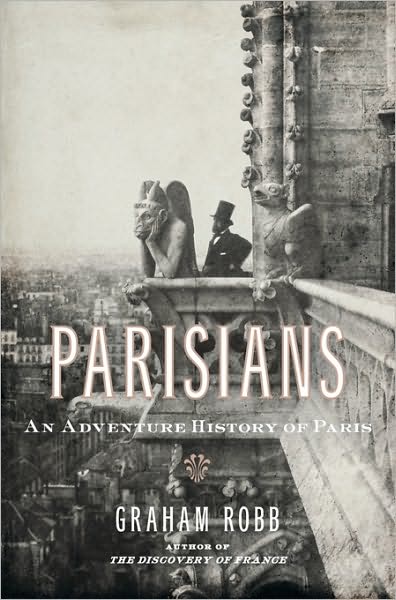
So, yes, I spent my time being an obnoxious tourist. But, I've read a lot about Paris and I've continued to read up on one of the most fascinating cities in the world. Graham Robb tells the story of this wonderful city through short stories--real stories. And, as if I needed any more convincing, Robb has managed to make me fall in love even more with the history of Paris. He starts with the story of the attempted escape of the royal family from the city after the start of the revolution.
My favorite story was the one based on the real story on which Alexander Dumas based The Count of Monte Cristo. Apparently, a police officer that worked in the archives found the notes on this bizarre case. Of course, another writer came along and embellished the story almost beyond recognition. Still, even if the most stripped down version of this story is true--holy crap! Seriously. Holy crap! Supposedly, this cobbler was set up right before his wedding by his friends as a joke. They denounced him as a possible spy. Back then, that wasn't something you played around with. Only one of the four stayed out of the prank, but he also didn't warn the cobbler. I don't want to give to much away, so I won't give out too many details. But let me tell you, this guy went all in to get back at these guys.
Paris of the olden days had nothing to do with the image portrayed in Sabrina. It still doesn't. I wish I could go back to see it. It's so easy to forget that Paris has an incredibly dark side. This book brings out the best and worst of Paris. (Vidocq anyone?) This is totally one of the more enjoyable histories of Paris out there.
Next up: A Red Herring Without Mustard, by Alan Bradley
Musings and thoughts on books and various articles. Hope to someday have a home big enough for the enormous library I have built in my head.
Sunday, March 20, 2011
Friday, February 25, 2011
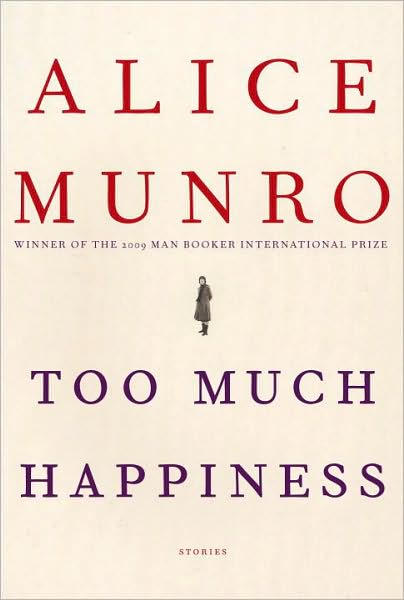
Too Much Happiness: Stories (Alice Munro)
I'm ashamed to admit I've never read anything by Alice Munro before. Of course, she's a critically acclaimed writer. This book garnered her the Man Booker Prize, though she lost to a pseudo-romance novel for a big prize in Canada. Actually, I read an article in the Washington Post about how this was a travesty. So, I decided to check it out from the library.
This is a collection of short stories, so if you're looking for a novel, move along. If you're looking for something easy to read, move along. The writing isn't particularly complicated, but I will admit that I felt all these stories had a point and it went totally over my head. The first story, about a woman who had basically the most awful thing possible happen to her at the hands of her husband, I did understand. Surprising, since my situation is nothing like hers, but I found the story heartbreaking and beautiful in its tragedy.
Most of the characters in the stories are older, so that's probably why the stories went a little over my head. I can't say that I've shared similar life experiences with them, although that should stop me from understanding them to a certain extent. Adultery makes up a good chunk of these stories and Munro takes a look at it from several sides. I did find her grasp of this theme fascinating.
The story that stuck with me the most, however, was Child's Play. The narrator of that story is an older woman that recounts her experiences with a special needs girl whose family rented a floor in the house where the narrator and her family live. I didn't like her from the beginning and I totally hated her at the end. Munro totally masters the subject. Her writing isn't judgmental at all, but it still manages to create quite a reaction.
None of these stories have happy endings, actually, so if you're looking for something uplifting to read, move along. Still, I can't deny the power of Alice Munro's writing. She keeps it relatively simple, but you feel the undercurrents of complexity behind the deceptively bare writing. I can't say I will go out of my way to read more of her works for now, but I will be looking her up again later.
Next up: Parisians: An Adventure History of Paris, by Graham Robb
Saturday, February 19, 2011
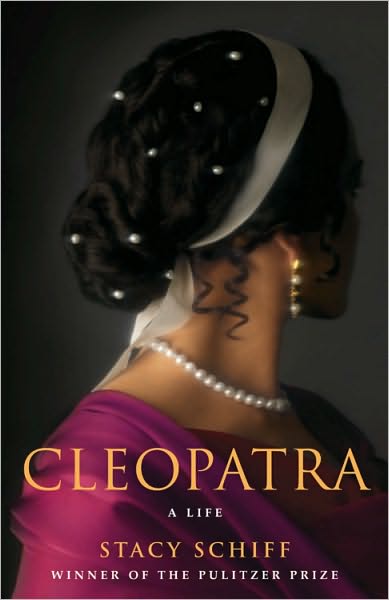
Cleopatra: A Life (Stacy Shiff)
I mention this because I want to make the point that I may have read more about this woman than most general readers. Stacy Shiff's book will enlighten most general readers. Her focus lies in Cleopatra's brilliant maneuvering in circumstances that would have bested the most seasoned politician. At the age when most of us now are in college or just trying to figure out what to do with ourselves, she tied her fate to that of the most famous Roman general of her time: Julius Caesar.
She had a vast fortune, and her relationship with Marc Antony--the stuff of legends--made her even wealthier. Most film renditions of her life cut out her three children with Antony. Caesarion always shows up, but only when Caesar recognizes him and towards the end when his mother loses everything. It's easy to forget, then, that Cleopatra had no interest in taking Rome. After all, if she had Caesar's only son, why not try to take over the capital of the nascent empire? Her aim, however, always focused on keeping Egypt independent and a force in the Mediterranean world.
Cleopatra managed to outlive her siblings, no small feat considering the Ptolomys made a nasty habit out of conflicts among family members. This doesn't just mean the normal family drama. The fact that Caesarion never tried to kill his mother and that Cleopatra actually had her son learn about governing made them the exception to the rule.
Schiff's writing makes history interesting. Quite frankly, writers like her keeping coming back to history books. Some writers forget that history has the word "story" in it. Schiff tells Cleopatra's story as accurately as possible while maintaining the excitement of what actual took place. It's really amazing that Cleopatra's story has been embellished so much. As Schiff tells it, the real story is amazing all on it's own.
Next up: Too Much Happiness, by Alice Munro
Saturday, January 22, 2011
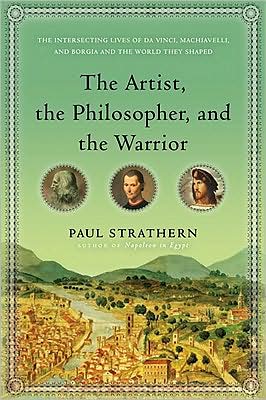
The Artist, the Philosopher, and the Warrior: The Intersecting Lives of Da Vinci, Machiavelli, and Borgia and the World They Shaped (Paul Strathern)
Of course, most people know something about these three men. Strathern doesn't make any big revelations about these three men, but for someone that hasn't read much about this time period, this book will be very interesting.
One statement he does make that I hadn't considered before referred to Leonardo's influence on the world. The man that made drawings of helicopters and tanks, who painted the famed Mona Lisa and The Last Supper, had little to no influence on science. In part, this happened because Leonardo decided to keep many of his ideas secret. Strathern posits that this happened in part because of the horrors that Leornardo saw while working for Cesare Borgia.
Few historical figures stir such sinister feelings as does the Borgia family. Really, they didn't do anything that most powerful families wouldn't do back in those days (even nowadays). Yet they did do it openly, which came as a surprise. I went to Catholic school when I was little, so reading about the Borgias comes with a few shocks. Although I don't necessarily think that some of the allegations about them are true, I wouldn't put it passed them. Cesare Borgia took advantage, schemed and plotted, and he succeeded for as long as his father lived. Like Strathern, I agree that he may not have imploded if he hadn't been at death's door when Alexander VI died. Would Italy become a unified country 300 years earlier than it did if Cesare Borgia had triumphed? Who know. In the end, nothing that he built outlasted him. And at his death, he was only 31 years old.
Strathern does more for Machiavelli than for his other two subjects. Maybe this is because I knew less about him than about Leonardo and Cesare, but I think this may be the case for most people. Strathern quotes many of Machiavelli's letters to his friends and gives a pretty good idea of Machiavelli would have been like. Indeed, I think he would have been a lot more interesting to talk to than Borgia or Leonardo. (Borgia might try to maim or kill you, while Leonardo might have been too smart for me to understand.) Despite his fame for writing a manual for dictators, Machiavelli doesn't like the type of person that would have put people in harms way for no reason. If anything, he understood the world around him and pointed out truths that plenty of people didn't want to hear.
Sometimes Strathern repeats himself a little too often. Each chapter reads almost as if you didn't have to read the ones before. I would understand that if it were a book of essays on these three men, but it isn't. Other than that, Strathern writes in a straightforward, smart, yet accessible manner. Quite enjoyable.
Next up: Cleopatra: A Life, by Stacy Schiff. And I'm super excited that it finally came in at the library for me. I've read plenty about her, but reviewers sang Schiff's praises for her writing so I'll give this one a go.
Sunday, January 9, 2011
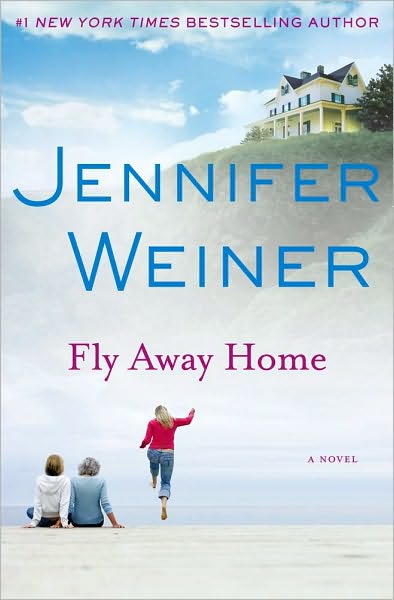
Fly Away Home (Jennifer Weiner)
I can't believe it has been over ten years since I first picked Jennifer Weiner's first novel, Good in Bed. The first time I saw the title I thought it would be smutty. Pleasantly, it wasn't. This didn't stop the security person at the airport to make a comment about how much she loved erotic novels while she was going through my very carefully packed bag.
Regardless, I have read almost all of Weiner's books since. I've loved everyone of them (although Certain Girls didn't really do it for me as much as the others). Fly Away Home totally lived up to my expectations.
Weiner has three narrators to tell the story. Sylvie, the mother, is married to Richard Woodruff, a US senator. Diane and Lizzie are her daughters and they both have their issues. And no, they aren't minor, quirky issues. These are big problems. The book starts with the incident that serves as a catalyst for Sylvie reexamining her life and her relationship with her daughters. Richards is discovered to have had an affair with an aide, who he helped land a job at a DC law firm.
Old story, right? Practically a cliche, you say? Well, in Weiner's hands the reader gets to see the fall out from the family's perspective. She does still cover themes that are staples for her, such as body image and the relationship between sisters. It also doesn't paint any of these women's choices with a black and white pallet. They may not always be sympathetic. Still, people aren't perfect and making bad choices doesn't necessarily make you a bad person.
This book has been labeled as "chick lit". Like Wiener, I do find it a little offensive that so much of women's fiction is pigeon-holed into this label. Lets face it, it kind of belittles them. We don't have a genre of "dude lit" even though it should totally exists. Anyway, Weiner is a fantastic writer and she totally deserves more respect.
So that's my love letter to Jennifer Weiner. I will most certainly read anything else she puts out for years to come.
Next up: I think this is the first nonfiction book I review here. The Artist, the Philosopher, and the Warrior: The Intersecting Lives of Da Vinci, Machiavelli, and Borgia and the World They Shaped.
Saturday, January 8, 2011
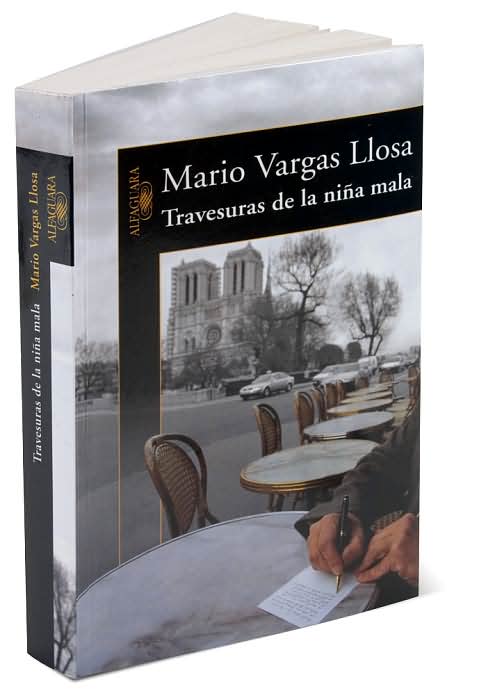
The Bad Girl (Mario Vargas Llosa)

I read this for the book club I participate in. The idea had been that we expand our horizons and read something from a foreign author. Mario Vargas Llosa made a great choice, since he has just won the Nobel Prize in Literature.
A friend of mine had told me she wasn't a fan of Vargas Llosa, so I hadn't felt the need to rush to read any of his things. I must say that most of my impressions about Vargas Llosa came from her.
So when this book totally surprised me. Of course, Vargas Llosa is a good writer. My friend didn't say otherwise. But I knew he was fairly conservative and my friend had confirmed this.
This book may have a political message, but if it did I missed it. It's about Ricardo, a rather unambitious though intelligent man whose main goal in life is to live in Paris. When he is a teenager, two sisters that say they hail from Chile move into his barrio in Lima. One of them steals his heart forever.
Like Ricardo, we only know her consistently throughout the book as "the bad girl". She calls him "the good boy". Both labels fit quite perfectly. Ricardo is good guy that loves this woman despite everything she does to him. And she pulls quite a lot of crap on him. She constantly comes into his life and leaves him, moving all over the world. He does move to Paris fairly early in the book, realizing his one goal early in his life. This isn't enough for her. The bad girl needs to constantly move, constantly connive, constantly deceive. She wants a level of security that is unattainable and that eludes her because of her own need to continuously look for something better than what she has at that moment. I found it really hard to have any kind of sympathy for her.
Ricardo knows he shouldn't continue his relationship with this woman. Yet he can't help himself. No matter what she does, he can't stop loving her. I have yet to meet a man like this, but I'm sure there are a few out there like this. I identified with him a lot, probably more than I would like. He doesn't want to conquer the world, he just wants to live quietly in Paris with the woman he loves. That sounds pretty good to me.
One important thing: I read the Spanish version of this book. So my opinion of the writing doesn't take into account the translation. Vargas Llosa doesn't need me to say he is a good writer. He has a million and a half prizes. I can only say that I enjoyed it and didn't find it stuffy or too high end for me to understand. I'm glad I read it.
Next up: Fly Away Home, by Jennifer Weiner.
Monday, December 20, 2010
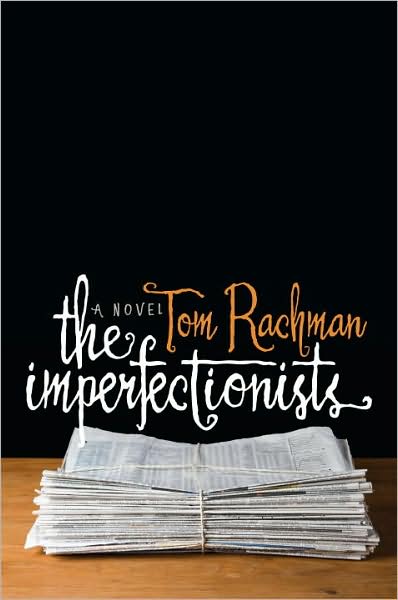
Review: The Imperfectionists (Tom Rachman)
Now, I work in a newsroom, so I have a little bit of a bias coming into this book. But the reviews had all said this book is fantastic, so I gave it a shot.
Will I sing its praises as one of the best books of the year? Yes, I will. Tom Rachman essentially wrote a collection of short stories all held together by the fact these folks work for an English language newspaper in Rome. None of these characters seems to have a completely functional personality. And, lets face it, most offices have its share of strange people. Newsrooms might have a bigger proportion just because of the nature of the job. Most journalists are glorified gossips. You have to lack a certain amount of shame to but into people's business.
You can think what you want about the media. Again, I work for a newspaper so I have my bias on this. The world of journalism could use a good shake up. Never would I refer to all those pundits out there as journalists. But, in the end, people want to make money and the "journalism" that is out there sells. You want something better? Stop watching the crap that's out there.
OK, that was my preachy moment. Back to The Imperfectionists. Racham really put together a collection of short stories with the newspaper serving as the unifying element. There is the hard-nose editor with a fairly decent family life; the copy editor that lives alone and makes her family believe her life is much more glamorous than it actually is (it's not at all); the accountant that feels the news staff doesn't understand the newspaper's situation; the editor in chief, an ambitious woman that chose her career over having a personal life; and a subscriber that reads every word of the paper, to the point that she is still over a decade behind on the news.
There are other characters, but you get the picture. You would think that working as a journalist in Rome would be a dream job. This book made me want to rethink my chosen field of work. It's realistic in that the relationship between journalists and journalism tends to be, shall we say, dramatic. We've all had our hearts broken by an industry that's intensely competitive and that seems to focus less on finding truth than in pushing certain agendas. The characters in this book have plenty of heartbreak to go around, in and outside the paper.
The reader can see what will happen when it comes to light that the paper has no online presence. After all, we've all seen the dismal numbers for most publications even if they have a strong online product. But Rachman makes them all sympathetic, even when you don't want to feel anything remotely like sympathy towards these folks. They are painfully human. But that's what makes this a fantastic read.
Stylistically, these episodes read almost like different sections of a play. Rachman uses quite a lot of dialogue. It's almost as if he doesn't want to interrupt these people's lives with narrative. If you're looking for detailed descriptions of Rome or Paris or other locations in the book, you will be disappointed. But the locales aren't the focus anyway. The characters make you think: could this be you?
Very worth reading. Considering that The Imperfectionists has been on several best of 2010 lists, Rachman's next book will probably find a lot of eagerly anticipating readers.
Next up: The Bad Girl, by Mario Vargas Llosa
Will I sing its praises as one of the best books of the year? Yes, I will. Tom Rachman essentially wrote a collection of short stories all held together by the fact these folks work for an English language newspaper in Rome. None of these characters seems to have a completely functional personality. And, lets face it, most offices have its share of strange people. Newsrooms might have a bigger proportion just because of the nature of the job. Most journalists are glorified gossips. You have to lack a certain amount of shame to but into people's business.
You can think what you want about the media. Again, I work for a newspaper so I have my bias on this. The world of journalism could use a good shake up. Never would I refer to all those pundits out there as journalists. But, in the end, people want to make money and the "journalism" that is out there sells. You want something better? Stop watching the crap that's out there.
OK, that was my preachy moment. Back to The Imperfectionists. Racham really put together a collection of short stories with the newspaper serving as the unifying element. There is the hard-nose editor with a fairly decent family life; the copy editor that lives alone and makes her family believe her life is much more glamorous than it actually is (it's not at all); the accountant that feels the news staff doesn't understand the newspaper's situation; the editor in chief, an ambitious woman that chose her career over having a personal life; and a subscriber that reads every word of the paper, to the point that she is still over a decade behind on the news.
There are other characters, but you get the picture. You would think that working as a journalist in Rome would be a dream job. This book made me want to rethink my chosen field of work. It's realistic in that the relationship between journalists and journalism tends to be, shall we say, dramatic. We've all had our hearts broken by an industry that's intensely competitive and that seems to focus less on finding truth than in pushing certain agendas. The characters in this book have plenty of heartbreak to go around, in and outside the paper.
The reader can see what will happen when it comes to light that the paper has no online presence. After all, we've all seen the dismal numbers for most publications even if they have a strong online product. But Rachman makes them all sympathetic, even when you don't want to feel anything remotely like sympathy towards these folks. They are painfully human. But that's what makes this a fantastic read.
Stylistically, these episodes read almost like different sections of a play. Rachman uses quite a lot of dialogue. It's almost as if he doesn't want to interrupt these people's lives with narrative. If you're looking for detailed descriptions of Rome or Paris or other locations in the book, you will be disappointed. But the locales aren't the focus anyway. The characters make you think: could this be you?
Very worth reading. Considering that The Imperfectionists has been on several best of 2010 lists, Rachman's next book will probably find a lot of eagerly anticipating readers.
Next up: The Bad Girl, by Mario Vargas Llosa
Subscribe to:
Posts (Atom)