Saturday, June 16, 2012

The Return (Victoria Hislop)

I read this last year when my husband and I went to Spain to visit his family. Yes, this story is set in Spain. Cliche, but there you have it.
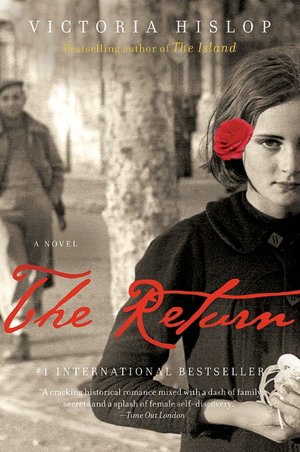
The ReturnThis novel tells the story of the Ramirez family.The family members are: Concha and Pablo, the parents; Antonio, the eldest and very much a supporter of the Republic; Ignacio, a matador and very much in favor of the fascist; Emilio, a musician and sensitive soul who does not want to dabble in politics at all; and Mercedes, a flamenco dancer that captivates the city of Granada. Before the beginning of the war, Mercedes meets a Gypsy guitarists named Javier. The quickly fall passionately in love.

Their story, set in late 1930s Spain immediately before and during the Civil War, is interwoven with Sonia's story. Her mother was a Spanish refugee that settled in London. Sonia travels with a friend to Granada to take flamenco classes. She meets a cafe owner, Miguel, who tells her the story of what happened to the Ramirez family.

Of course, you know this story is going to be tragic for everyone involved. The Spanish Civil War tore apart the whole country and no family was left untouched. Hislop makes no pretense at impartiality. She's very much on the side of the Republic. Although I also tend to favor the side of the Republicans, the realities of Spanish life are a little oversimplified in this story. I had a hard time believing that Javier and Mercedes could fall in love so quickly. Yes, she's 16, but he isn't, and the intensity of their feelings after knowing each other for such a little amount of time is a little off putting.

And, like most stories that go back and forth in time, the story set in the 30s is much more interesting that the one set in the present. Sonia's story, in all honesty, is a little boring. She's having issues with her husband, who clearly doesn't understand her. It can be interesting, but it just doesn't quite fit right. Hislop tries to make it kind of parallel. It just didn't totally work for me.

One  thing that totally turned me off was the mix up with the last names. Spaniards (and Puerto Ricans, and most people in the Spanish-speaking world) have two last names. The first last name is the father's and the second is the mother's. Hislop kind of mixed them up in some instances. I don't know if I just misunderstood, but I know Hispanic last names.

It's a decent story, but the Spanish Civil War is a notoriously difficult subject to write about. It's a good effort.

Next up: My Afternoons With Margueritte by Marie-Sabine Roger.

Saturday, December 10, 2011

The Queen of the South (Arturo Perez-Reverte)

A quick note about why I haven't updated the blog in the so long. The First, WeRead app on Facebook kind of died. So, and I kid you not, I couldn't remember what I had read and in what order. Maybe I'm just not as good as I should be retaining what I've read or maybe I read so much that if I don't write it down quickly I get confused. Anyway, I'm on Goodreads now and that's totally helping. It's a great place to share books and reviews.


With that, I'm moving on to the next book I'm reviewing: The Queen of The South. Another quick note: I read this book after reading Los Huesos de Dios, by Leonardo Gori. As far as I could tell, you can't find this book in English that's why I'm not reviewing it here. But, if you read Spanish or Italian, check it out.


OK, so on to The Queen of the South. I read this in Spanish as well, but it's available in English. This novel came out a few years ago but has had a resurgence in popularity because of the telenovela that came out recently. I didn't watch it, but apparently it was a pretty big hit. This book is about Teresa Mendoza, a young woman from Sinaloa that gets caught up in the underworld of drug trafficking.She ends up living on the Mediterranean coast of Spain, where she meets another young man. He also happens to drive a boat to bring drugs into Europe from Morocco. I don't want to give to much away, but circumstances lead to her being in jail where she meets a woman that will change her luck and her life.

There have been plenty of complaints about how this novel glamorizes narcos. I can totally see why, but I don't think that's really what the story is about. Teresa has very humble beginnings. She grows up in a violent society, where people do things they may not want to do to survive. Teresa, I think, happens to be cold-blooded enough that she refuses to let circumstances dictate whether she lives or dies. Would I want to meet this woman? No damn way. But I think Perez-Reverte manages to make her, if not a sympathetic character, at least someone that the reader can respect.

Next up: The Return, by Victoria Hislop

Saturday, November 5, 2011

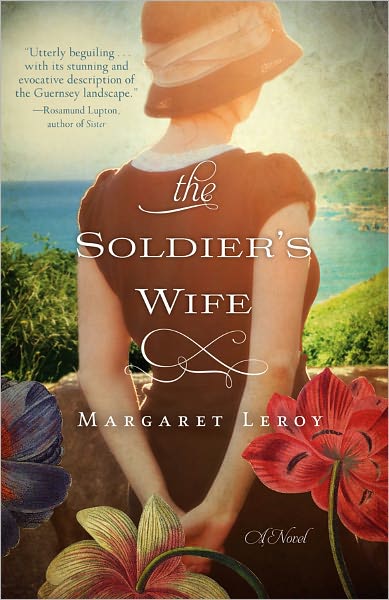
The Soldier's Wife (Margaret Leroy)

Cover Image
Yes, another novel set in World War II. I'm pretty sure this is my last one for a while, since even I'm starting to get uncomfortable with how much I read about this time period. That said, this novel truly delivered. It's the story of Vivienne, an Englishwoman that lives in Guernsey, one of the islands within the United Kingdom that suffered Nazi occupation. She married a man from Guernsey and moved there with him, and at the beginning of the story he's already off to fight in France.

Her decision to stay on the island, even though everyone that could and wanted to get out did, settles a new course for her life that she couldn't have imagined. She makes clear from the beginning that her marriage hasn't worked for quite a while.This, of course, makes what happens later on less morally questionable.

After the Nazi invasion of the island, some officers move into the house next door to Vivienne's. She eventually begins an affairs with one of the soldiers. I didn't find that Gunther's and Vivienne's self-justifications about what their affair were surprising. Both keep themselves almost purposefully in the dark about what the war means, as well. Vivienne's daughters work as a sort of moral compass, though the neither girl really understands what's going on around them.

Several other story lines take place, none of them particularly original. Still, Leroy manages to bring an intimacy to this war story that makes this book very much worth reading.

Next up: The Queen of the South, by Arturo Perez-Reverte

Sunday, August 21, 2011

Secret of the White Rose (Stefanie Pintoff)

Cover ImageThe third installment in the Simon Ziele mystery series certainly delivers. Pintoff has created a character that a reader can very much care about. Simon has flaws, but he's so earnest and honest that you can't help liking him.

This time around, Ziele is back in New York, having left the small town where he has worked as one of two cops. His friend, Alistair Sinclair, calls him in to help investigate the murder of a judge that Alistair knew. This judge had been presiding over the trail of an anarchist that had set a bomb in New York that killed several people, including a child.

Of course, this murder is only the beginning of what becomes an increasingly complicated and bloody case. It also becomes quite personal for Ziele in a way he could never have foreseen. It looks like Pintoff may continue to mine Ziele's sad and dramatic past into the series. It could have seemed forced, but so far it hasn't. That may not work from here on in, but I will always give Pintoff the benefit of the doubt.

Ziele's relationship with Alistair becomes more complicated with this book. Alistair's flaws and his own past become a crucial part of this story. Pintoff has never written this relationship in a way that makes them real partners, and she's certainly never had Alistair appear as a sidekick. Indeed, in this book, Isabella has a much bigger role than she had in A Curtain Falls. I'm hoping this continues, not only because it would be great to see her spend more time with Ziele. She's smart, resourceful, and I think Ziele may overestimate how much their different backgrounds affect their relationship.

I'm looking forward to the next installment. So far, Pintoff has avoided going through an obvious route. Indeed, she's exercised a lot of restraint in particular in the relationship between Ziele and Isabella. It's one of the reasons I continue to look forward to her books.

Next up: The Soldier's Wife, by Margaret Leroy.

Sunday, August 7, 2011

In The Garden of Beasts: Love Terror and an American Family in Hitler's Berlin (Erik Larson)

Cover Image

Perhaps I read a little too much about World War II. I hadn't really thought about it until a friend of mine pointed it out. However, if you take a look at the fiction and nonfiction that is making it to bookstores, a lot of it is set during World War II.

And why not? Those times had everything that makes a good story--though I would never say I'm sorry I missed living during those troubled times. But all the best and the worst in people came out then. Obviously, readers today still create a demand for books on the subject.

Erik Larson decided to tell a story about World War II from the point of view of a family that saw itself in the middle of the storm as it gained momentum. Lets face it: most of us have heard about the appeasement policy implemented by Lord Chamberlain, but we seldom hear about what the American ambassador in Berlin thought or did. Larson tells their story.

William Dodd, the unfortunate soul that found himself having to deal with a Germany plunging into darkness, became ambassador to Berlin in 1933. President Roosevelt assigned him after having five other men turn down the job. Dodd asked for the job because he believed it would allow him time to finish his History of the South, an encyclopedic collection that was his life's work. He had studied in Germany as a young man and had always loved the country. He had quite a rude awakening once he arrived in Berlin. Between the internal drama with people in the State Department and dealing with the rising Nazi leadership, he saw himself in a situation that would have taxed any diplomat.

Dodd took his entire family with him, including his daughter, Martha. She was quite a character--at 23 she'd had several lovers and an estranged husband. She managed to sleep with Nazis, communists, and a few men in between. She caused quite a scandal within the State Department, given that her father did nothing to curve her behavior. I'm not sure if that shows what a blind spot Dodd had in regards to his daughter or if he just let her live her life as she saw fit. Martha definitely personifies how many people felt during the beginning of the Nazi regime. At first, she defended it vigorously. As she saw more of what was going on, she changed her tune. It's easy to forget how many people didn't see the Nazis as a threat at all.

Larson's prose reads like fiction. He doesn't quote anything that he hasn't read in documentation of the time, but he still manages to drive this story in a way that deeply engrosses the reader. It could have been another dry book on American diplomacy during Hitler's rise to power, but his approach and his writing style make it a pleasure to read.

Next up: Secret of the White Rose, by Stefanie Pintoff.

Sunday, July 3, 2011

The Postmistress (Sarah Blake)

Cover Image

It took a few tries before I actually got around to reading this book. I checked it out from both the DC and Fairfax County libraries more than once. Yes, this has happened with more than one book.

Anyway, I finally got around to reading it. The Postmistress has three main story threads that intersect. The reader first meets Frankie, now an elderly lady, telling the story. She had worked as a journalist in London during the Blitz under Edward R. Murrow. Here, her life intersects with that of a young bride in Franklin, Massachusetts.

Iris James works as the postmistress in Franklin. It's a small town, so she pretty much meets everyone in town on a regular basis. The town doctor, William, meets her during a medical exam that he finds a little unusual. He's married to Emma, the young bride that will eventually bring Frankie to Franklin.

Due to some tragic string of events, William ends up in London before US intervention in World War II. Frankie meets him one night while hiding in a shelter during one of the German bombing of the city. There, another tragic string of events brings these women together.

Like any story set in World War II, this story is sad. Don't pick this up if you don't want to read a tragedy. Everyone has something awful happen to them, even though only Frankie travels through Europe during the war. Blake's writing brings you into the story and you really do care what happens to these characters even though you know it can't end well. This is probably my peeve with this book. I knew immediately that nothing will go well for these folks, so I keep myself from truly getting into the story. Yes, that's my own failing, but if you make it so obvious that everything is going to go to crap, then a reader has a chance to pull away before you really pull them in.

I can appreciate the writing, but, alas, I'm neither glad nor sad that I read the book.

Next up: In the Garden of Beasts: Love, Terror, and an American Family in Hitler's Berlin, by Erik Larson

Saturday, July 2, 2011

33 Men: Inside the Miraculous Survival and Dramatic Rescue of the Chilean Miners (Jonathan Franklin)

Cover Image
Of course everyone knew a book about the incredible story of the Chilean miners would come out sooner rather than later. And this one is probably just the first of many more to come.

The drama of the rescue sucked me in, just as it did many around the world. I watched as much of the rescue as I could, even while I worked.

Jonathan Franklin managed to get permission to work closely with the rescue team. He has interviewed major players in this story, including all 33 miners. Though nobody can understand what these men went through, Franklin manages to give readers a good look at what life was like inside the mine. It became easy to forget, as the miners showed a united front, that 33 people living under those conditions had to have problems arise. Franklin makes these men human again without taking away from the extraordinary way they faced their ordeal.

Rescue workers also overcame unimaginable obstacles to get the job done. Men and women from all over the world pitched in to get these men out. Franklin describes these efforts in a way that makes you hold your breath, even though you know how the story ended.

If someone had written a movie with this premise, I'm pretty sure most people would have thought it ridiculous. The drama going on 2,300 feet below ground and the drama going on above with rescue workers, family members of the trapper miners, the press, and the Chilean government, is just something you can't make up. Thankfully, it had a happy resolution.

Next up: The Postmistress, by Sarah Blake.