Thursday, April 21, 2011

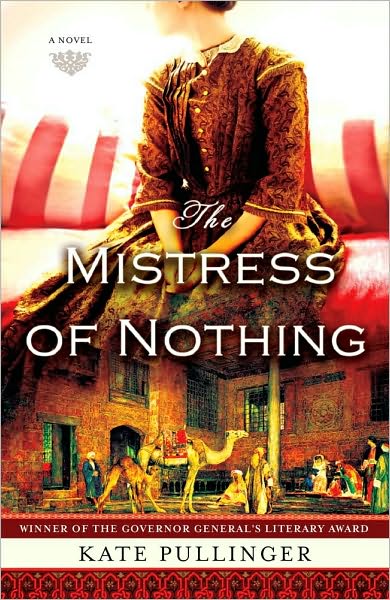
The Mistress of Nothing (Kate Pullinger)

Cover Image

So the reviewer in The Washington Post that complained about the fact that this book beat out Alice Munro's Too Much Happiness for the Governor General's Literary Award (a Canadian prize) wrote that this book read like a romance novel and that it was pretty much a big mistake to give it the award instead of Munro's collection of short stories.

I can say with all honesty that this makes me think that this person has never read a romance novel. So there! Romance novels have a formula, and this book does not follow it at all. At. All.

Of course, most of these awards go to books that are depressing. Most great works of literature are depressing. I enjoy books with tragic stories, as anyone can tell from checking out this blog. This book was just as depressing as Munro's. Does that mean it was better written? No. I can say Munro's work stories definitely had much more complicated plots. I don't think that means that The Mistress of Nothing isn't a good book.

Anyway, I don't presume to know what the judges at these competitions think. Though I love to read, I can't say that I enjoy high literature. So if you decide to check out those books, you can decide for yourself who should have won that prize.

In my opinion, Pullinger delivered a well written and well researched book. She wrote the story from the point of view of Sally Naldrett, Lady Lucie Duff Gordon's maid. Lady Duff Gordon suffered from tuberculosis and the doctors told her she needed a drier climate, so she moved to Egypt. Sally went with her. In Luxor, Sally falls in love with their Egyptian guide, Omar. They have an affair that has tragic consequences--more for Sally than for Omar.

I hadn't heard of Lady Duff Gordon before. She published a book of her letters from her time in Egypt and had gained some fame as a literary translator. Apparently, many that knew her loved her. Sally did, too. Unfortunately, in this story, she comes across as a heinous bitch. Not all the time, mind you, but she treats Sally horribly once she finds out about the affair. In a way, she personifies someone that I've come to dislike intensely: a person of privileged that has the ability to show kindness as long as it's towards someone that doesn't affect them directly.

Pullinger kept the story moving pretty well, and Sally makes a good narrator. Maybe it would have been a more exciting story if she had chosen to tell it from Lady Duff Gordon's point of view, but it's great to get the story from a perspective that most tend to ignore.

If this review seems a bit tepid, it's because my reaction to the book was tepid. To put it simple: it was alright.

Next up: When Tito Loved Clara, by Jon Michaud.

Thursday, April 7, 2011

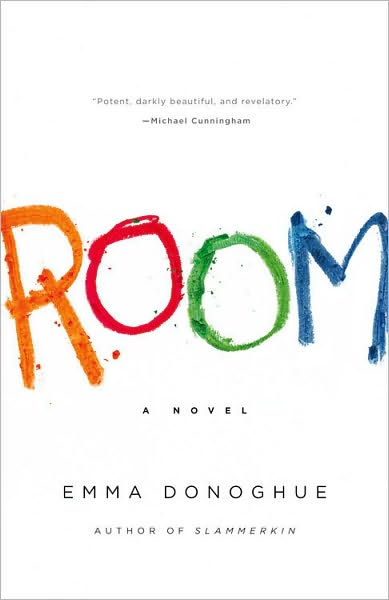
Room (Emma Donoghue)

Cover Image
I heard from quite a few people that this book was absolutely amazing. A co-worker told me she pretty much locked herself away an entire weekend to finish it. One of my book club friends also highly recommended it, that it is one of the best books she's read.

Usually this level of praise makes me skeptical. Not to mention that I'd already decided to avoid the book because of the subject matter. A little five year-old boy, Jack, tells this story. He lives with his mother in Room. He doesn't know anything else and thinks the world outside Room is Outer Space. So, everything in Room, to him, is unique. So it's Table, instead of the table; Toilet, instead of the toilet; Rug, instead of the rug.

Of course, that means his mother had him in Room and that she too can't get out. The man that locked her up, only known as Old Nick, kidnapped her at 19. So this gives me the hibbie jibbies. She does the best she can raising Jack, teaching him what she can and making due with what Old Nick provides. Mind you, he doesn't really provide for them. She has to ask for things like medicine for "Sundaytreat," as Jack calls it.

Even though Jack is telling the story, you can get a feel for how his mother feels. They have few books, which of course they've read multiple times. She tries to keep him as active as possible within an 11' by 11' space. Her teeth are rotting, she suffers from bouts of depression. All things considered, she's doing an admirable job of raising her son. Considering the inherent boredom that must come within this type of situation, the book is never boring. Donoghue has painfully flawed characters--something to appreciate, since it would have been so easy to make Jack and his mom saint-like.

I think the story didn't end up creeping me out because Jack tells it. He doesn't know anything different from Room, so his perceptions aren't shaped on what he's missing. He's smart and inquisitive, and the combination of that with his lack of knowledge of the outside world drive his mother into taking a huge risk to get him out of Room.

Totally worth the short amount of time it takes to read. That doesn't mean it's simple and you'll forget about it as soon as you finish it. You'll be thinking about it for a while.

Next up: Mistress of Nothing,  by Kate Pullinger. This is the book that beat out Alice Munro's Too Much Happiness for the Governor General's Literary Award, in Canada. The reviewer from WaPo was quite outraged by this. I'll let you know if I think he's right!

Sunday, April 3, 2011

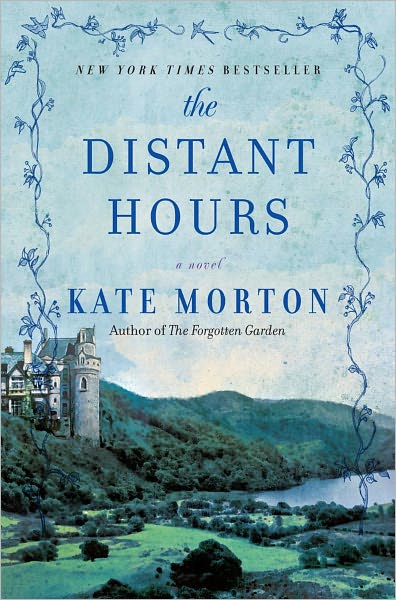
The Distant Hours (Kate Morton)

Cover Image
Another fantastic book from Kate Morton! I stumbled upon her work previously when I picked up a copy of The House at Riverton. It was tragic and beautiful and mysterious and I enjoyed ever moment of it. Morton continued in that vein with The Forgotten Garden, again a tragic story that you just couldn't put away.

I highly doubt Morton will ever write a book with a syrupy plot. And, frankly, that's not what you should look for in her books. It's not what I look to her for anyway.

We start Edith, who lives in London and works in publishing. She developed a love of books after her mother, Meredith, gave her a copy of The True History of the Mud Man when she was laid up in bed sick as a child. Turns out that the writer of that book, Raymond Blythe, lived at Milderhurst castle with his three daughters. Persephone (Percy) and Seraphina (Saffy) the twins, and Juniper--and Meredith lived with them after she her parents had her evacuated out of London during World War II.

Meredith and Juniper had developed a close friendship. Indeed, our story starts when Meredith finally receives a letter Juniper had written 50 years before. Edith is there when Meredith receives the letter. Edith  visits Milderhurst thought she doesn't tell the sisters who she is; she finds that the three sisters never married and have lived at Milderhurst castle all these years. Juniper, however, in her delusional state still manages to know Edith isn't a stranger. Of course, Juniper thinks Edith is Meredith.

From that point Edith does everything she can to find out as much as possible about her mother's life, especially of her time at Milderhurst. If you've read Morton's previous works, you know the story will have plenty of twists and turns. The Distant Hours does differ in that it has a much more Gothic feel to the story. Morton manages the pacing quite well, though I do confess that I was tempted more than once to look ahead to see what happened. It also helps that a literary mystery has a pivotal role in the plot.

So, bottom line: loved this book!

Next up: Room, by Emma Donoghue

Thursday, March 31, 2011

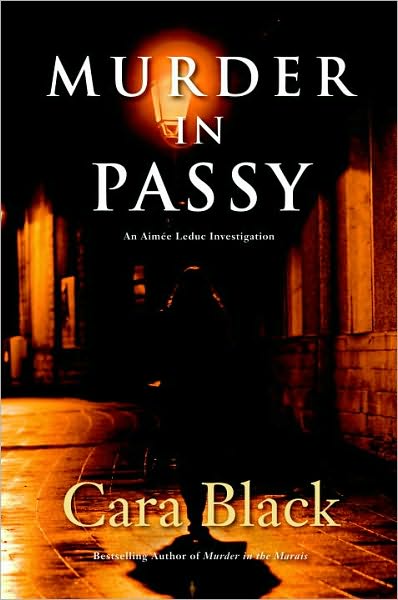
Murder in Passy (Cara Black)

Cover Image

Can't believe I'm already reviewing the next installment in the Aimee Leduc series! But yes, I made sure I put myself on the waiting list at the library as soon as they uploaded the record for this book. The action in this story takes place about a month or two after the end of the last book, Murder in the Palais Royal (my very first book review here!).

This time around Aimee becomes involved in a murder mystery that hits almost as close to home as the murder of her fiance, Yves (Murder in the Rue de Paradis). Morbier, her godfather, asks her to check up on his girlfriend, Xavierre. Turns out Xavierre had some involvement with ETA, the Basque terrorist group that operates in Spain and France. This involvement costs Xavierre her life and Morbier comes out as the main suspect. Alas, things aren't complicated enough in this scenario for Black's pleasure. Nope, we have to have Morbier involved in an investigation into corruption inside the police department itself. This makes his situation even more precarious.

And Aimee's possible new man, Melac, the police detective that we first meet in Palais Royal shows up again. He's not Aimee's typical bad boy, but he's no shrinking violet. Considering that she has slept with a murderer before, it's not out of the question that Melac might be involved with the corrupt flics Morbier is investigating.

All of the telltale features of the series appears. Aimee steps on dog poop wearing Louboutin heels, she runs around wearing designer clothes and complains about having gained a kilo. (That's about 1.6 pounds, by the way.) Her partner, Rene, doesn't show up as much in this book as in previous ones. I'm hoping that we get to see more about what's going on in his personal life. He seems to have met someone and I do hope that works out. You can't help but want Rene to find some happiness.

So another good story from Ms. Black. I hope she doesn't kill Melac off or worse. It can come in handy for Aimee to have a flic on her side.

Next up: The Distant Hours, by Kate Morton. I've been trying to fit this one into my schedule for a while. I really enjoyed Morton's first two books, The House at Riverton and The Forgotten Garden. Hope she can keep up the good work!

Sunday, March 27, 2011

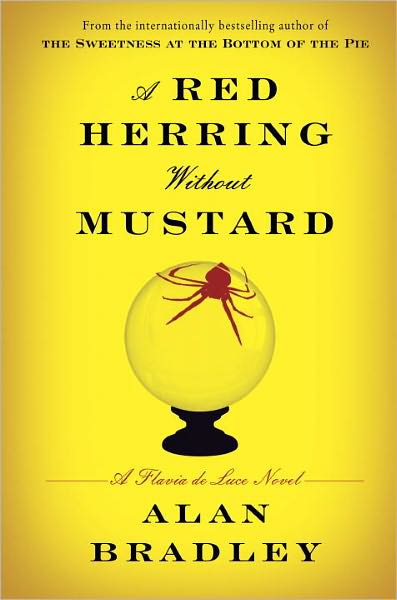
A Red Herring Without Mustard (Alan Bradley)

Cover Image
Alan Bradley has brought readers his third Flavia de Luce mystery. Flavia, a very brilliant scientist even if she is only eleven years old, seems to have a special ability of finding trouble--as in, finding dead bodies and such.

This time around, Flavia has to find out who attacked a Gypsy fortune teller that she led to a section of her family's property to settle for a little while. Of course, on the heels of that attack, Flavia finds the body of the town bully hanging from the trident of the sculpture of Poseidon in at Buckshaw (the de Luce family home).

Flavia also has to still deal with her two older sisters picking on her--all three of them are prodigies in their own way. Their mother's death continues to play a big part in the family's dynamics, as is to be expected. This book goes a little deeper into Flavia's feelings about growing up without her mother. Economic problems have come to the fore as well.

In this book, Bradley also goes a little deeper into Flavia's feelings of loneliness. She even acknowledges that she may want to make friends. It's great that Bradley has made sure to keep Flavia evolving, even though the action in this book happens relatively close to the action from the previous book. Like most brilliant people, Flavia finds herself alone more often than not. Maybe Bradley will give her a sidekick other than her trusty bike, Gladys?

Next up: Murder in Passy, by Cara Black

Sunday, March 20, 2011

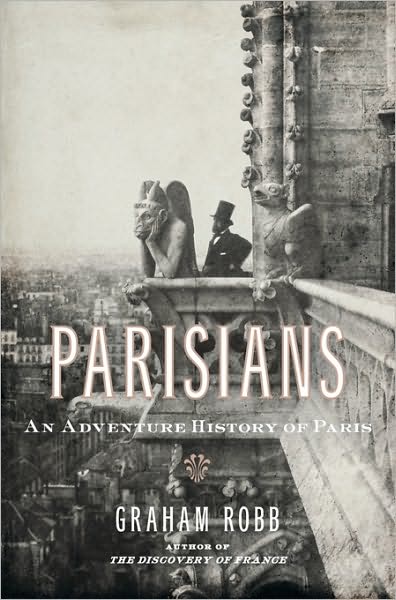
Parisians: An Adventure History of Paris (Graham Robb)

Cover Image
I've been to Paris once for a whopping three days. Can I just say that those three days were some of the most awesome of my life. And no, I didn't spend my time seeing the "real" Paris. Screw that. I was on vacation.

We stayed right in the Marais, 4th arrondissement just so you know. That's right, right in the center of Paris. If you walked down the block and looked straight down the street you could see Ile St. Louis and about a 20 minute walk to Ile de la Cite.

So, yes, I spent my time being an obnoxious tourist. But, I've read a lot about Paris and I've continued to read up on one of the most fascinating cities in the world. Graham Robb tells the story of this wonderful city through short stories--real stories. And, as if I needed any more convincing, Robb has managed to make me fall in love even more with the history of Paris. He starts with the story of the attempted escape of the royal family from the city after the start of the revolution.

My favorite story was the one based on the real story on which Alexander Dumas based The Count of Monte Cristo. Apparently, a police officer that worked in the archives found the notes on this bizarre case. Of course, another writer came along and embellished the story almost beyond recognition. Still, even if the most stripped down version of this story is true--holy crap! Seriously. Holy crap! Supposedly, this cobbler was set up right before his wedding by his friends as a joke. They denounced him as a possible spy. Back then, that wasn't something you played around with. Only one of the four stayed out of the prank, but he also didn't warn the cobbler. I don't want to give to much away, so I won't give out too many details. But let me tell you, this guy went all in to get back at these guys.

Paris of the olden days had nothing to do with the image portrayed in Sabrina. It still doesn't. I wish I could go back to see it. It's so easy to forget that Paris has an incredibly dark side. This book brings out the best and worst of Paris. (Vidocq anyone?) This is totally one of the more enjoyable histories of Paris out there.

Next up: A Red Herring Without Mustard, by Alan Bradley

Friday, February 25, 2011

Too Much Happiness: Stories (Alice Munro)

Cover Image

I'm ashamed to admit I've never read anything by Alice Munro before. Of course, she's a critically acclaimed writer. This book garnered her the Man Booker Prize, though she lost to a pseudo-romance novel for a big prize in Canada. Actually, I read an article in the Washington Post about how this was a travesty. So, I decided to check it out from the library.

This is a collection of short stories, so if you're looking for a novel, move along. If you're looking for something easy to read, move along. The writing isn't particularly complicated, but I will admit that I felt all these stories had a point and it went totally over my head. The first story, about a woman who had basically the most awful thing possible happen to her at the hands of her husband, I did understand. Surprising, since my situation is nothing like hers, but I found the story heartbreaking and beautiful in its tragedy.

Most of the characters in the stories are older, so that's probably why the stories went a little over my head. I can't say that I've shared similar life experiences with them, although that should stop me from understanding them to a certain extent. Adultery makes up a good chunk of these stories and Munro takes a look at it from several sides. I did find her grasp of this theme fascinating.

The story that stuck with me the most, however, was Child's Play. The narrator of that story is an older woman that recounts her experiences with a special needs girl whose family rented a floor in the house where the narrator and her family live. I didn't like her from the beginning and I totally hated her at the end. Munro totally masters the subject. Her writing isn't judgmental at all, but it still manages to create quite a reaction. 

None of these stories have happy endings, actually, so if you're looking for something uplifting to read, move along. Still, I can't deny the power of Alice Munro's writing. She keeps it relatively simple, but you feel the undercurrents of complexity behind the deceptively bare writing. I can't say I will go out of my way to read more of her works for now, but I will be looking her up again later.

Next up: Parisians: An Adventure History of Paris, by Graham Robb